The story behind Dussehra & Vijayadashami
Dussehra, derived from the ancient Sanskrit words dasha meaning 'ten' and hara meaning 'defeat', celebrates Lord Rama's vanquishing of the ten-headed demon king Ravana after ten days of epic struggle, embodying the perennial victory of truth, humility, and moral integrity over arrogance and injustice.
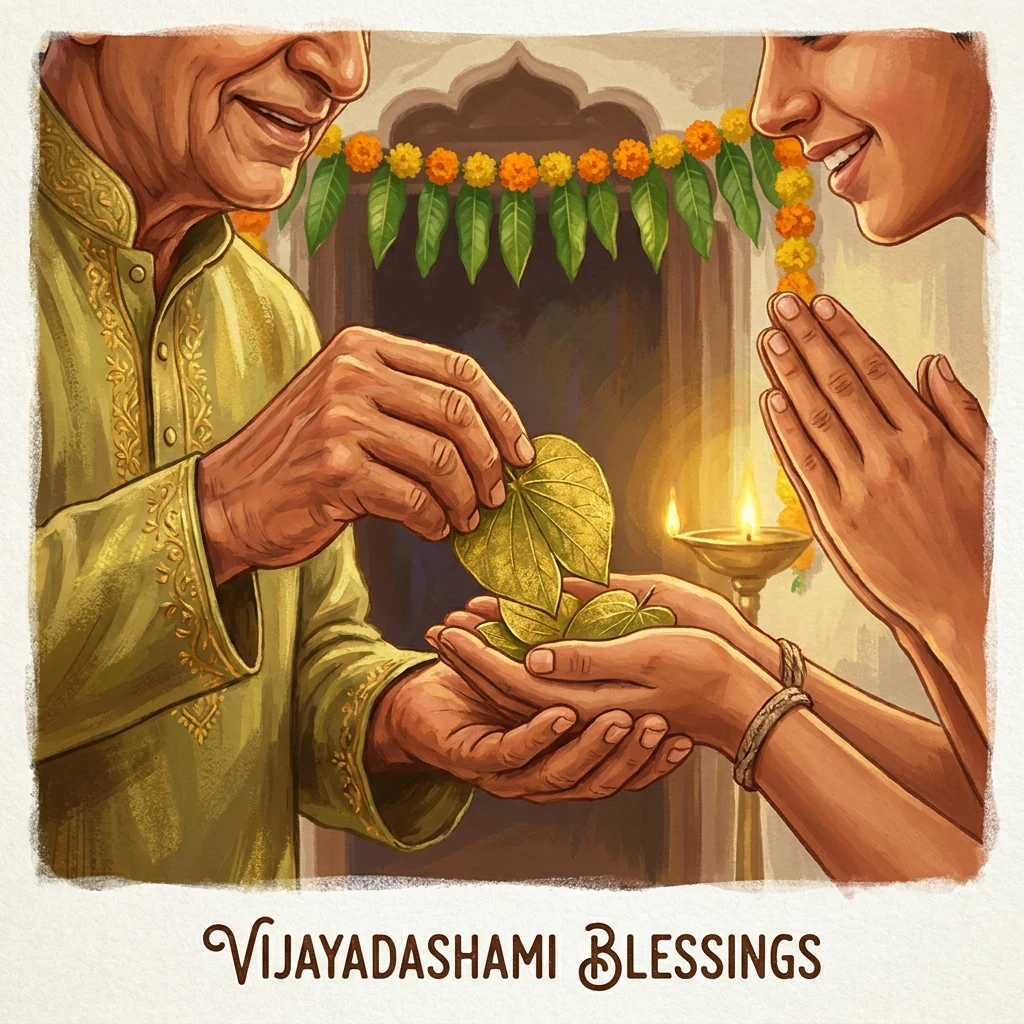
Across Eastern India, the same sacred day is revered as Vijayadashami, commemorating Goddess Durga's decisive cosmic triumph over the buffalo titan Mahishasura, culminating nine nights of devotion with emotional river immersions, joyous blessings of tools and learning, and renewed hopes for family prosperity.

Timeline of a sacred celebration
Key sacred epochs, royal legacies, and historical milestones of Dussehra.
The Slaying of Ravana
Lord Rama defeats the ten-headed Lankan king Ravana on Dashami, rescuing Sita and restoring moral cosmic order.
Mahishasuramardini's Triumph
Goddess Durga vanquishes the shape-shifting buffalo demon Mahishasura after nine days of fierce battle.
Retrieval of Celestial Weapons
The Pandava princes retrieve their divine bows from the hollow of the sacred Shami tree after completing exile.
Inauguration of Mysore Dasara
Raja Wodeyar I institutes the royal Dasara pageantry at Srirangapatna, establishing a 400-year living festival tradition.
Pan-Indian Public Holiday
Designated as a premier national gazetted holiday, celebrating cultural unity, educational initiation, and ethical renewal.
How it's observed today
From the grand effigy burnings of the North to the serene river immersions of the East and royal processions of the South.

Ravana Dahan & Ramlila Pageants
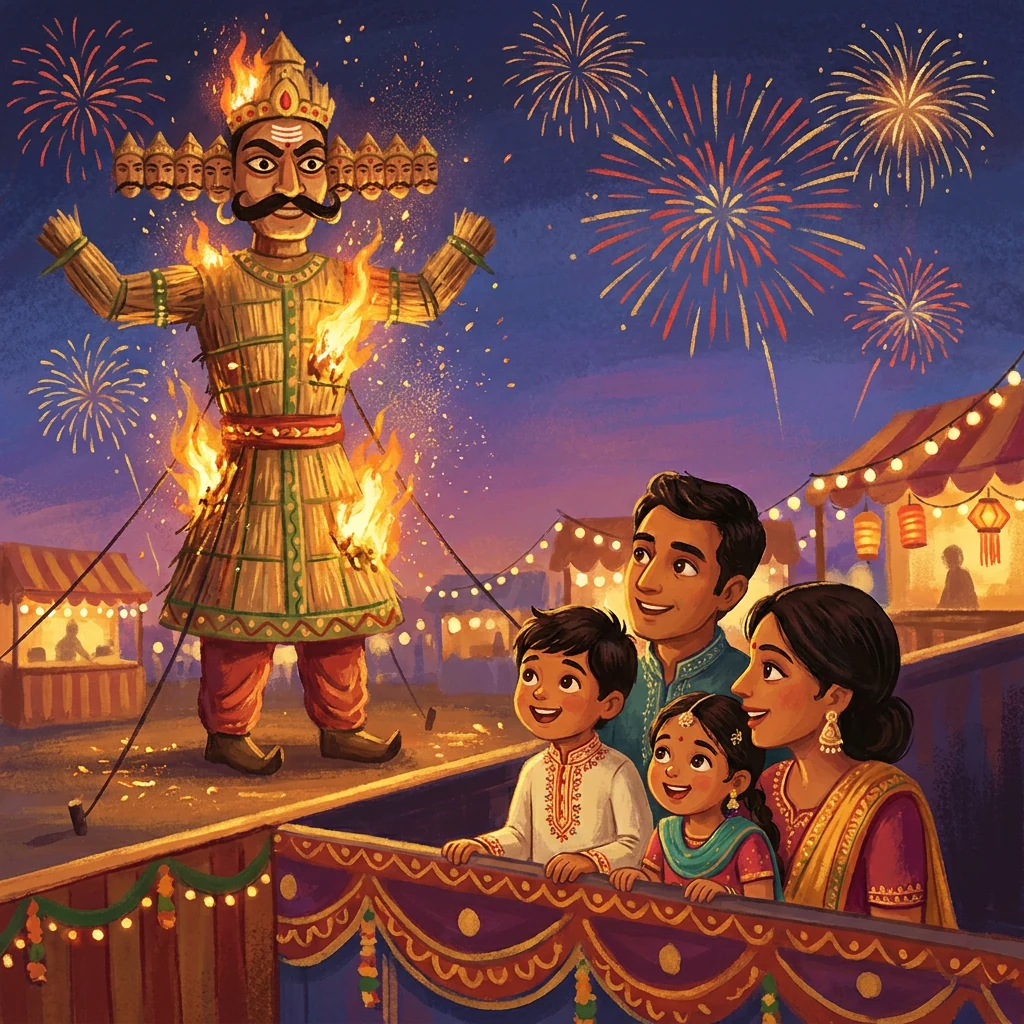
Spectacular community open-air theatre depicting the Ramayana culminates at sunset with the fiery explosion of 50-foot effigies of Ravana, Kumbhakarna, and Meghanada amidst cheering crowds.

Durga Visarjan & Sindoor Khela
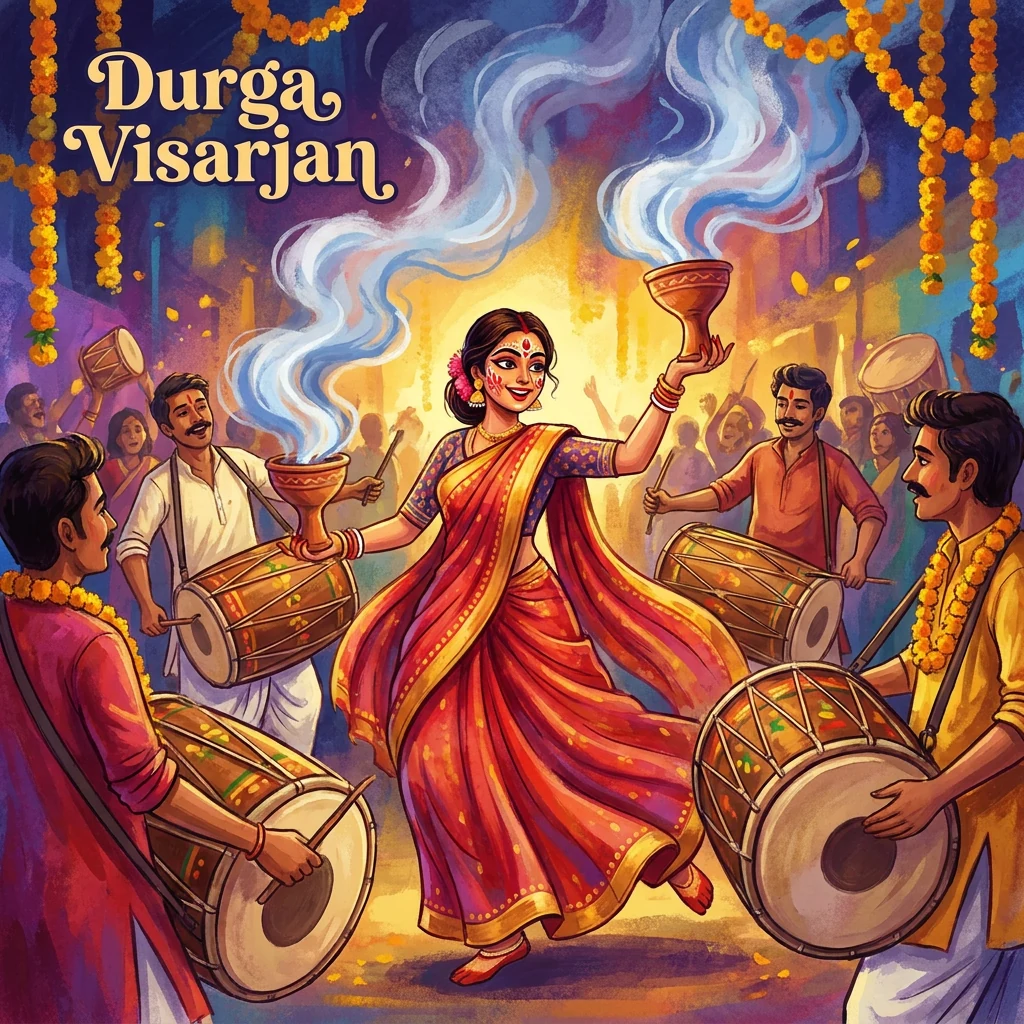
Devotees bid an emotional farewell to Goddess Durga with conch shells and rhythmic dhak drumming, while married women lovingly exchange red vermilion before clay murtis are immersed into holy rivers.

Mysore Dasara Jumboo Savari
A magnificent royal procession featuring beautifully caparisoned elephants, royal guards, and folk dancers escorting Goddess Chamundeshwari's golden howdah past the illuminated palace.

Ayudha Puja & Vidyarambham
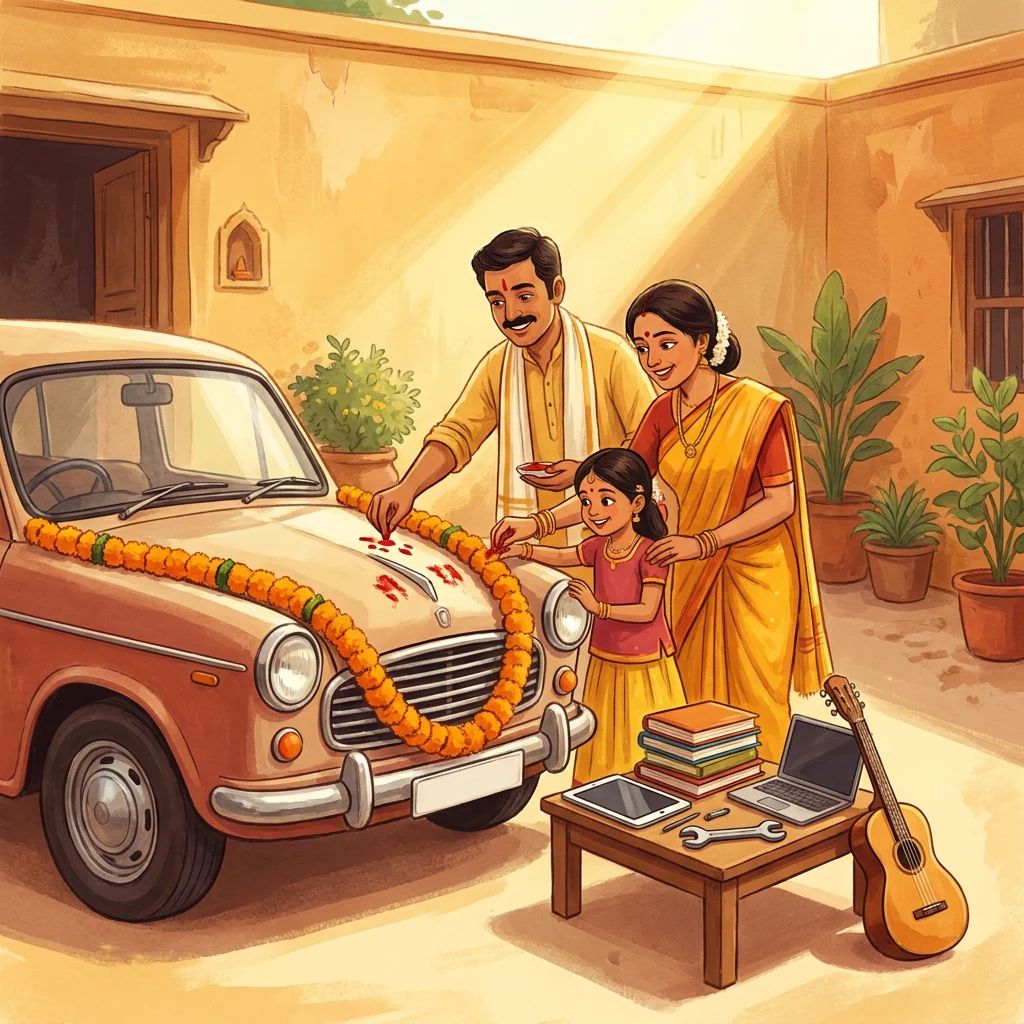
Craftsmen, drivers, and families sanctify tools, vehicles, and instruments, while young children are introduced to writing and the arts by tracing their first letters in sacred plates of rice.
Things to do on Dussehra
Meaningful cultural rituals, family gatherings, and community celebrations to make your festival memorable.
Plan your Dussehra holiday break
In 2026, Dussehra falls on a Tuesday. Take Monday, October 19 off to unlock a continuous 4-day festive escape.
 Mysore Palace Royal Illumination
4-Day Break
Oct 17 – Oct 20, 2026Because Dussehra is a mandatory gazetted public holiday across India, taking Monday, October 19 as leave creates an uninterrupted four-day autumn vacation from Saturday through Tuesday, ideal for traveling to the royal Mysore Dasara festivities or witnessing sacred Durga Visarjan immersions.
- Time away
- 4 days
- Leave needed
- 1 day
- Planning tip
- Take Monday off for a 4-day break
Essential Facts About Dussehra
Cultural insights, ancient legends, and historical trivia behind the victory festival
Why Jalebi & Fafda Rule Dussehra
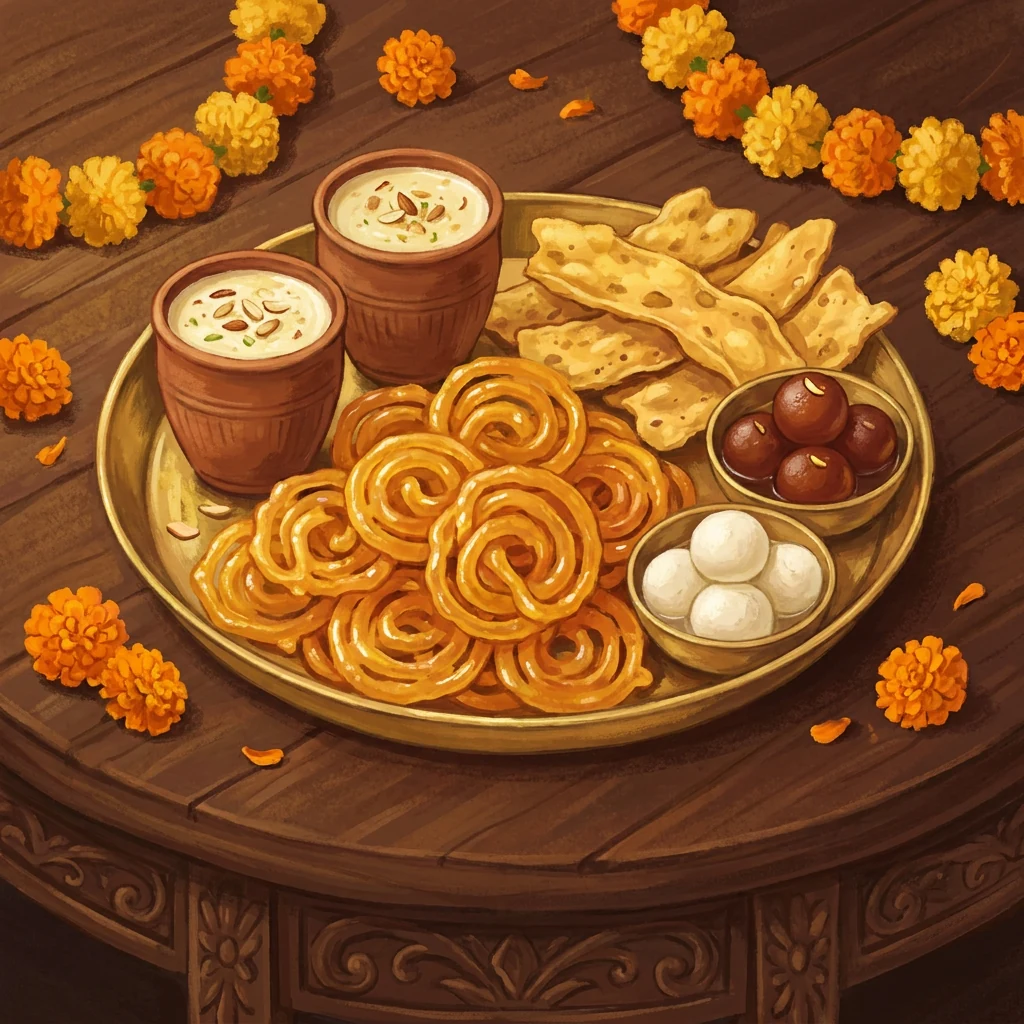
In Gujarat and across Western India, millions queue from dawn on Dussehra to eat hot jalebi and fafda; ancient lore claims Lord Rama loved sweets, while scripture links fermented gram flour with ending religious fasts.
The Ten Heads of Ravana
The ten heads of Ravana symbolize ten negative human vices: lust (Kama), anger (Krodha), delusion (Moha), greed (Lobha), pride (Mada), jealousy (Matsarya), ego (Ahankara), mind (Manas), intellect (Buddhi), and subconscious (Chitta).
The Sacred Shami Tree & Pandava Bows
According to the Mahabharata, the five Pandava brothers concealed their celestial bows within a sacred Shami tree during their year of incognito exile, retrieving them undefeated on Vijayadashami day.
100,000 Bulbs at Mysore Palace
During the ten nights of Mysore Dasara, the magnificent Amba Vilas Palace is bathed in golden light by exactly 100,000 incandescent light bulbs, creating one of the world's most breathtaking architectural sights.
Frequently Asked Questions
Common questions about Dussehra dates, rituals, public closures, and festive customs
Dussehra is celebrated on the tenth day (Dashami) of the bright lunar fortnight (Shukla Paksha) in the Hindu month of Ashvin, typically falling in September or October. In 2026, it is observed on Tuesday, October 20.
Yes. Dussehra is a mandatory gazetted central and state public holiday across India. All commercial banks, national stock markets (NSE & BSE), universities, schools, and government departments remain closed.
Diwali is celebrated exactly twenty days after Dussehra. According to the Ramayana, it took Lord Rama, Sita, and Lakshmana twenty days to walk on foot from the battlefield of Lanka back to their home capital of Ayodhya, where their arrival was greeted with thousands of oil lamps.
They are two names for the same sacred day emphasizing different epic narratives. 'Dussehra' predominantly highlights Lord Rama's victory over Ravana and the burning of effigies in North and Western India, whereas 'Vijayadashami' emphasizes Goddess Durga's triumph over Mahishasura in East and South India, as well as educational initiations.
Vijayadashami translates directly to 'the Tenth Day of Victory.' According to Hindu astrological tradition, the entire day is considered an 'Abujha Muhurat' (self-proven auspicious moment) that requires no planetary calculation to begin new businesses, buy property, purchase vehicles, or commence education.
More Festivals & Holidays in India
Explore other sacred festivals, commemorative national milestones, and public holidays across India