The story behind the Festival of Lights
Diwali, originating from the Sanskrit word Deepavali meaning 'row of lamps', marks the spiritual victory of light over darkness, good over evil, and knowledge over ignorance.
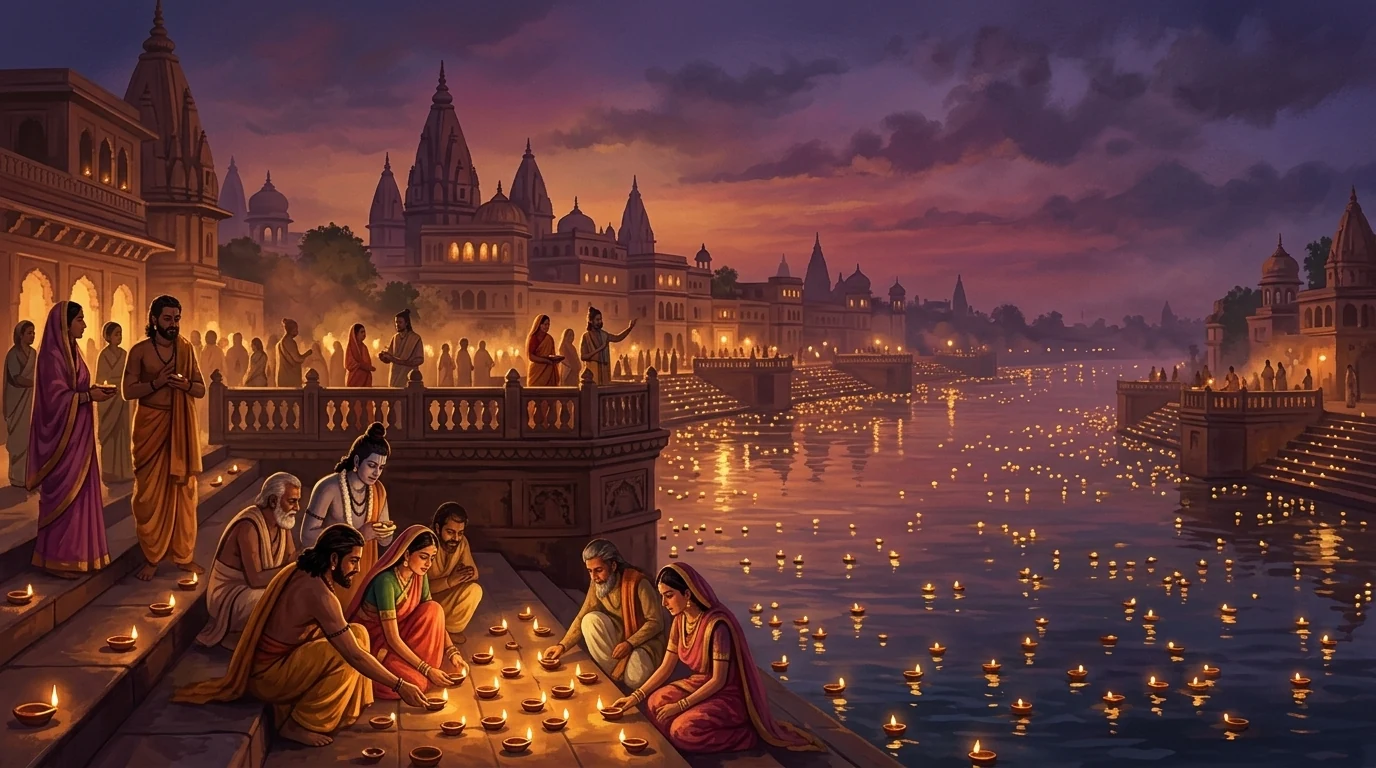
In ancient Ayodhya, citizens illuminated every street, riverbank, and doorstep with earthen clay lamps (diyas) to celebrate the homecoming of Lord Rama and Sita after fourteen years of exile, inaugurating an enduring festival of hope, renewal, and unity.

Timeline of a sacred celebration
Key milestones tracing the roots, evolution, and lasting resonance of Diwali.
Mentions in ancient texts
Early Sanskrit scriptures like the Skanda Purana record Deepavali as a sacred harvest festival of lights.
Return to Ayodhya
The timeless tradition of welcoming Lord Rama and Sita with thousands of glowing clay deepams takes root.
Bandi Chhor Divas
Guru Hargobind is celebrated upon arriving at the Golden Temple in Amritsar, illuminated in honor of freedom.
A lasting tradition
Celebrated across India and the globe as a vibrant symbol of hope, goodwill, and shared humanity.
How it's observed today
Diwali is observed throughout India and the global diaspora with time-honored customs that bring families and neighborhoods together.

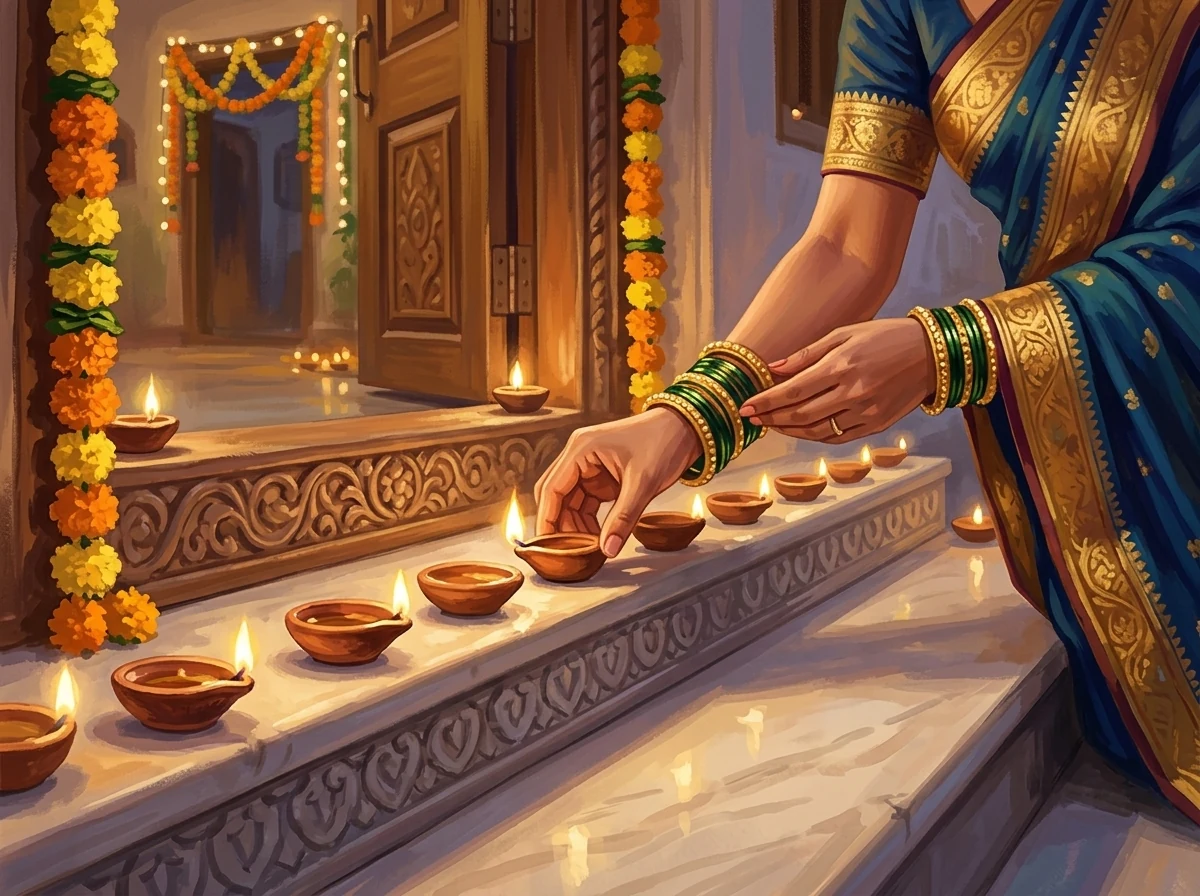
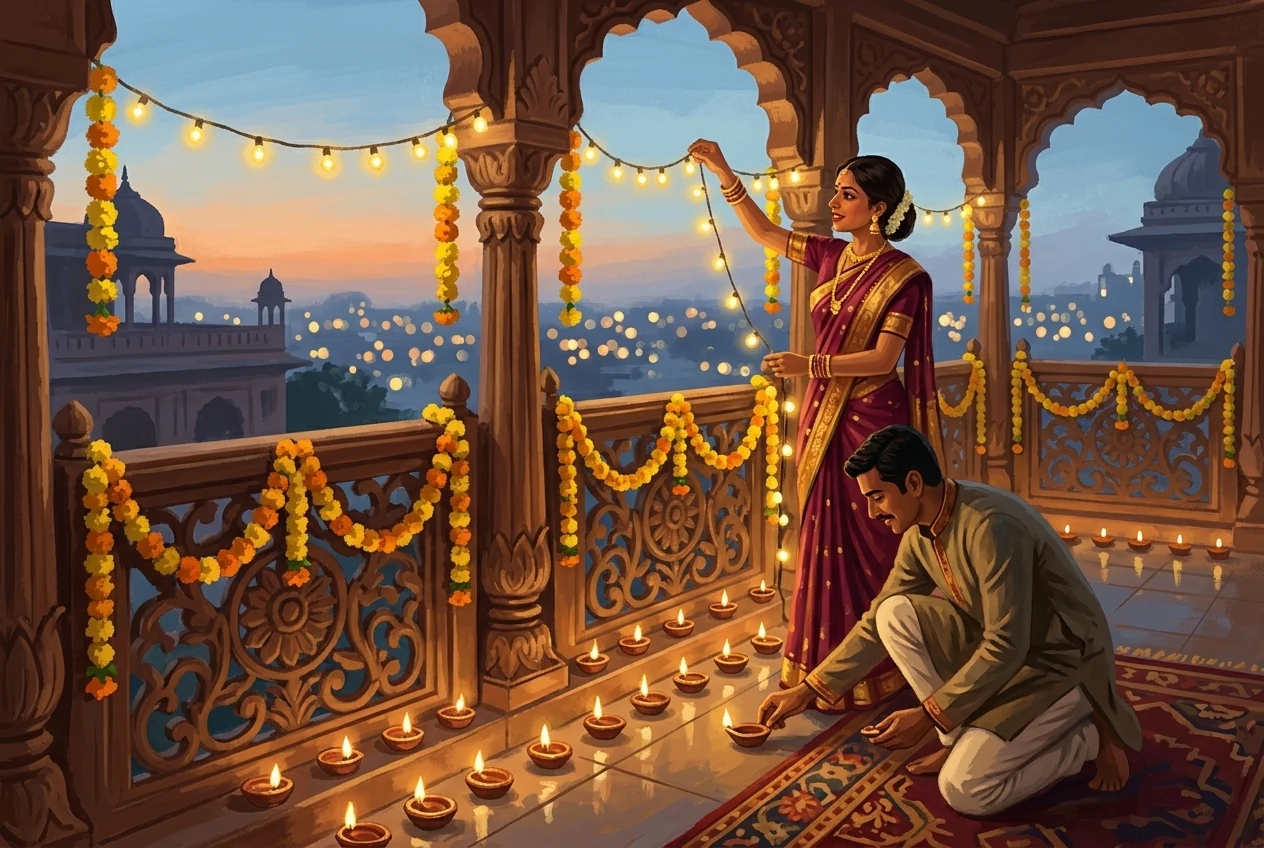
Lighting Diyas & Deepams
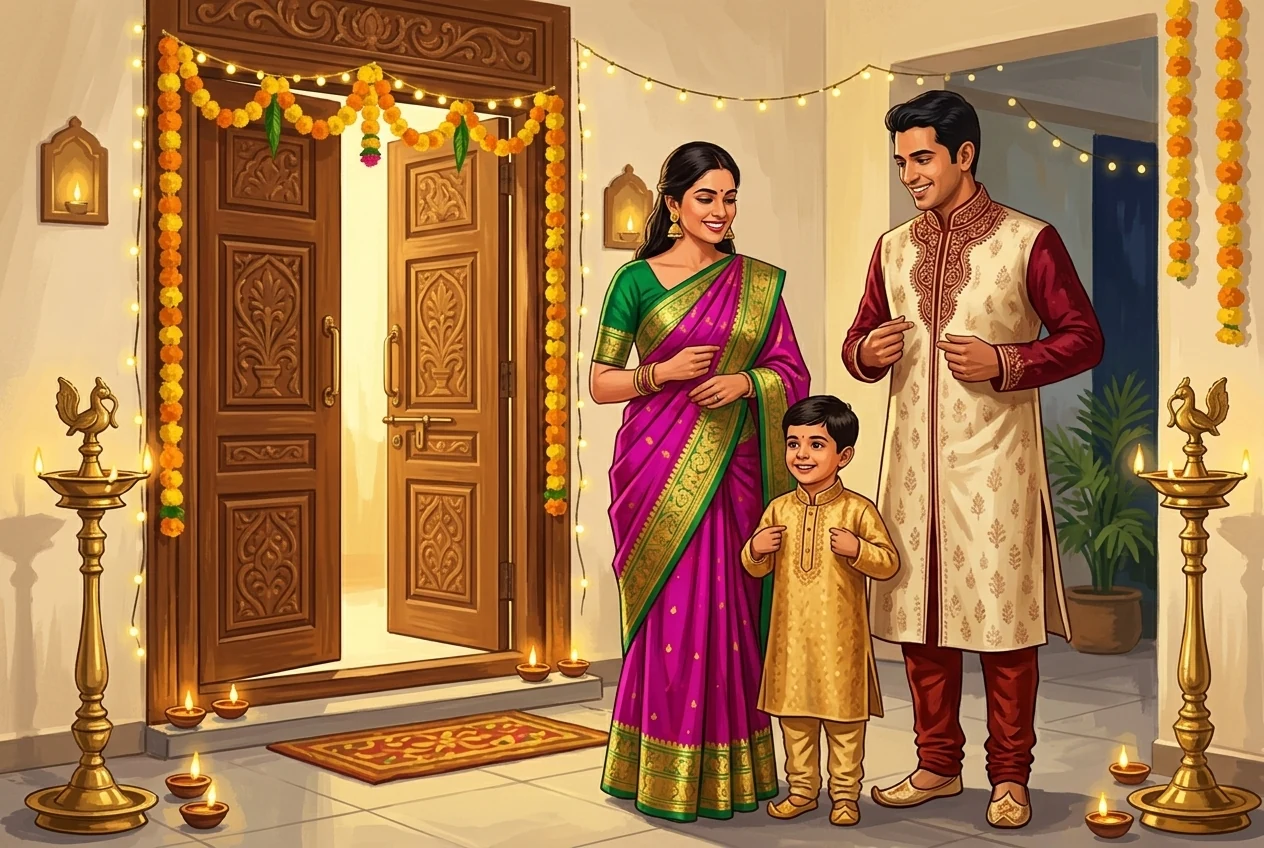
Earthen clay lamps filled with oil are lit along doorways, windows, and verandas to dispel darkness.

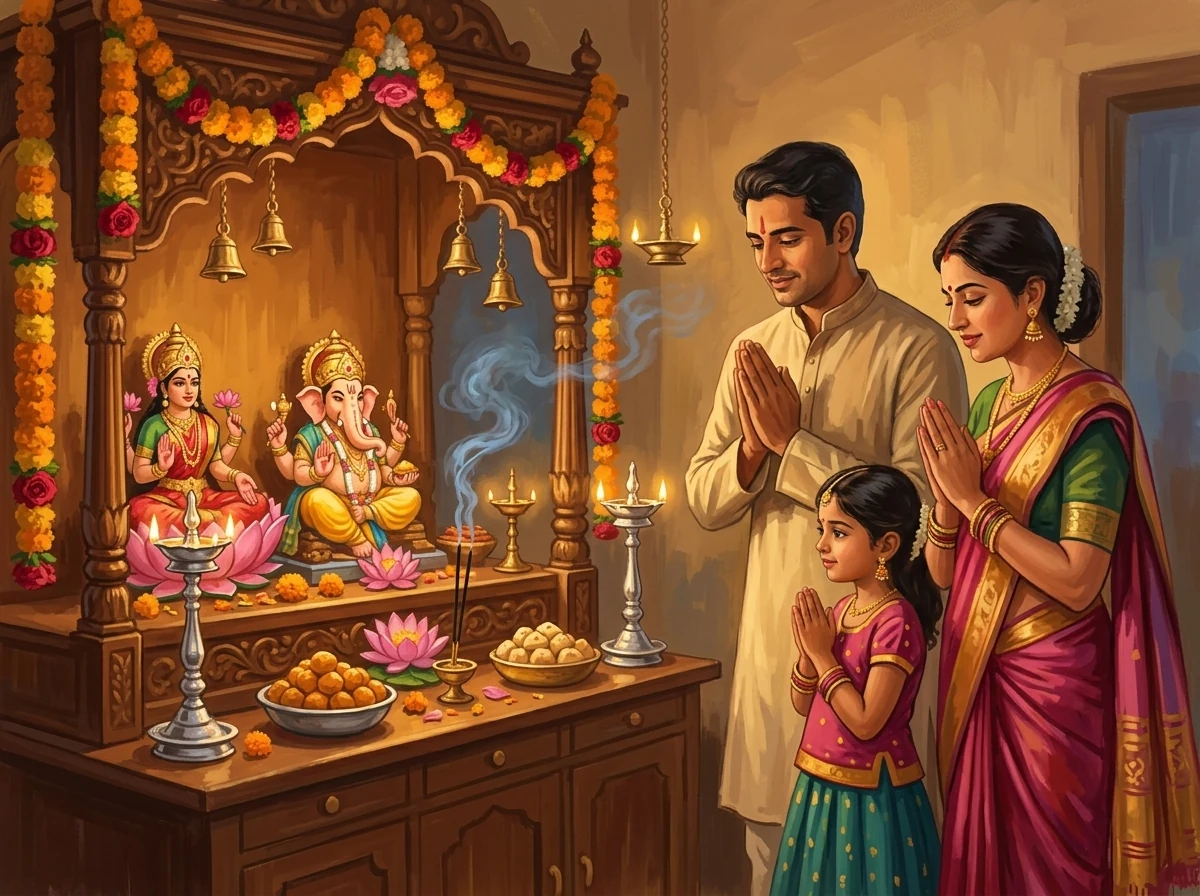
Lakshmi & Ganesha Puja
Families gather before decorated home shrines in the evening for prayers offering flowers, sweets, and gratitude.

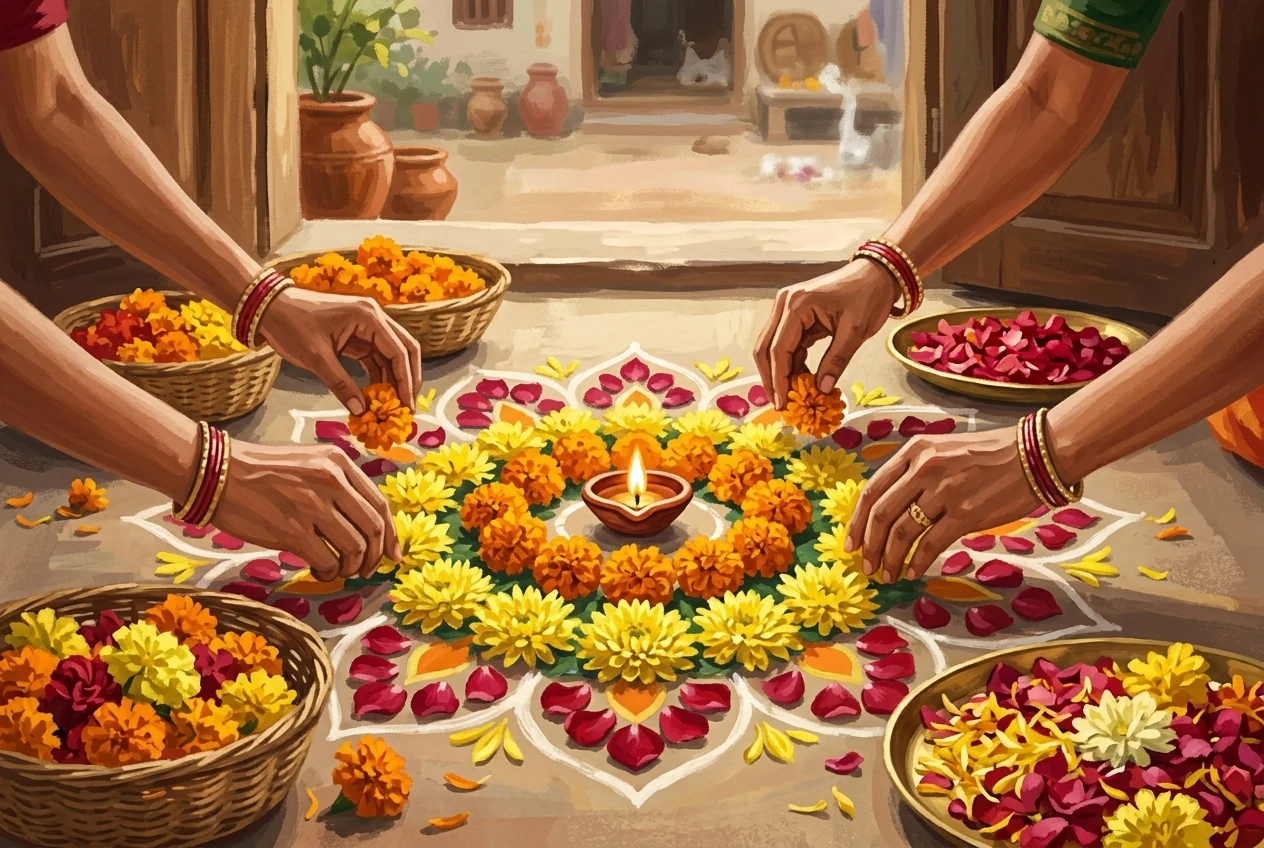
Intricate Rangoli Patterns
Thresholds are adorned with vibrant geometric floor art created from colored powders and fresh flower petals.

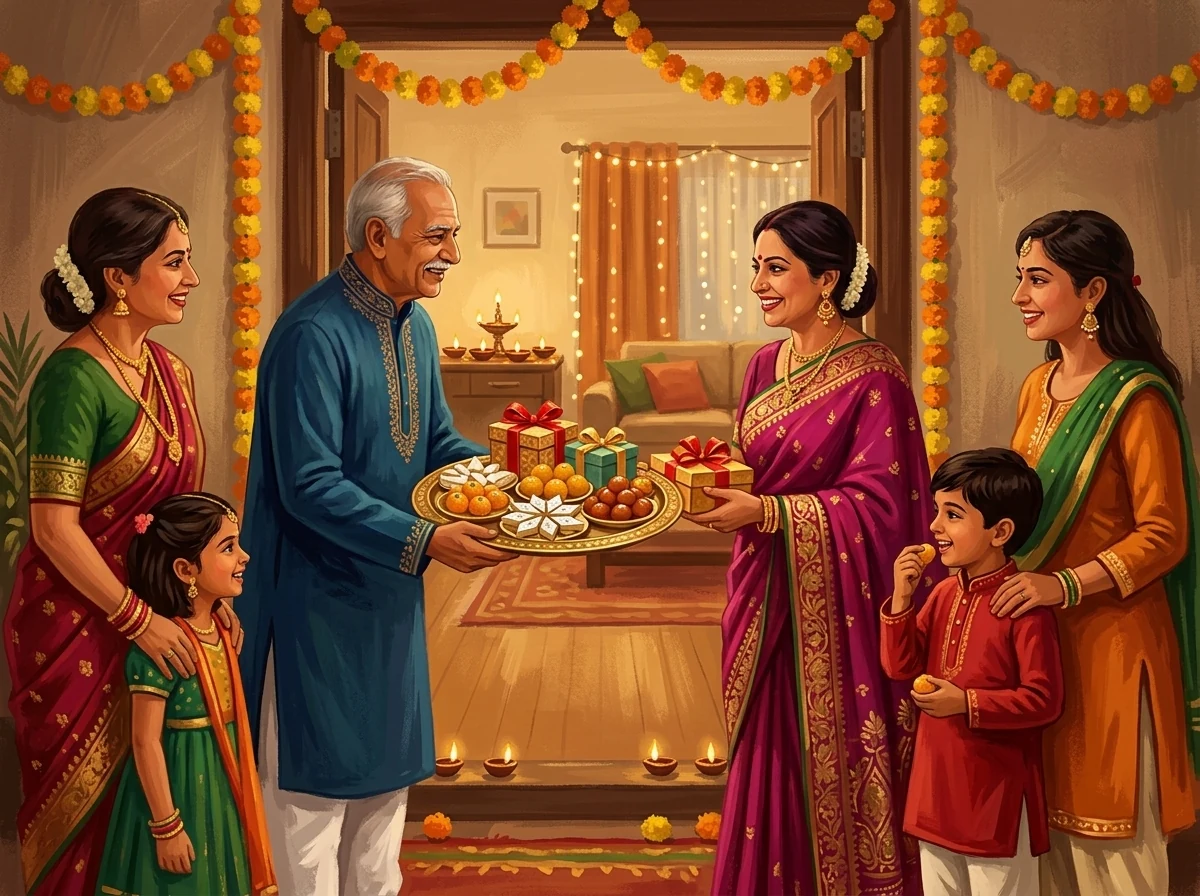
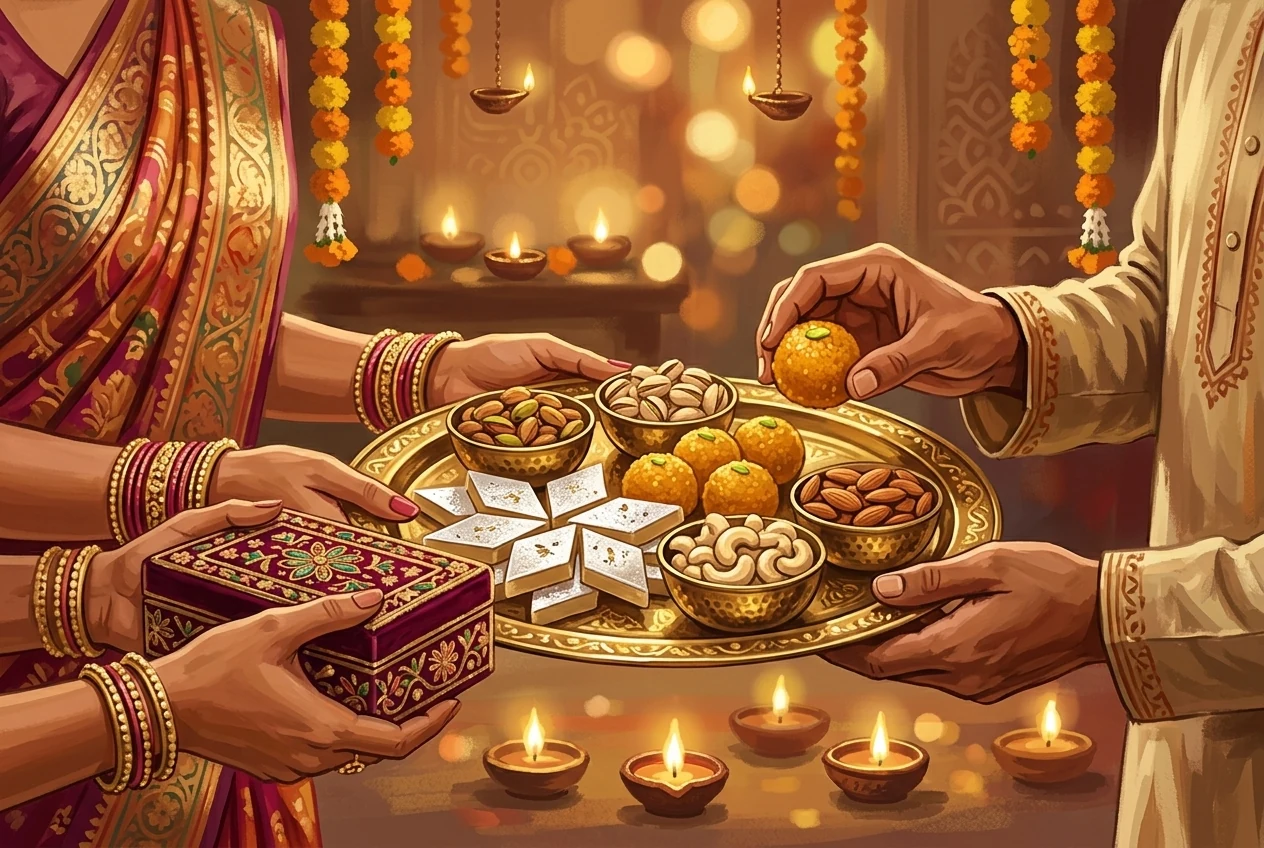
Sharing Mithai & Gifts
Friends and relatives exchange ornate boxes of traditional sweets, dry fruits, and gifts to celebrate togetherness.
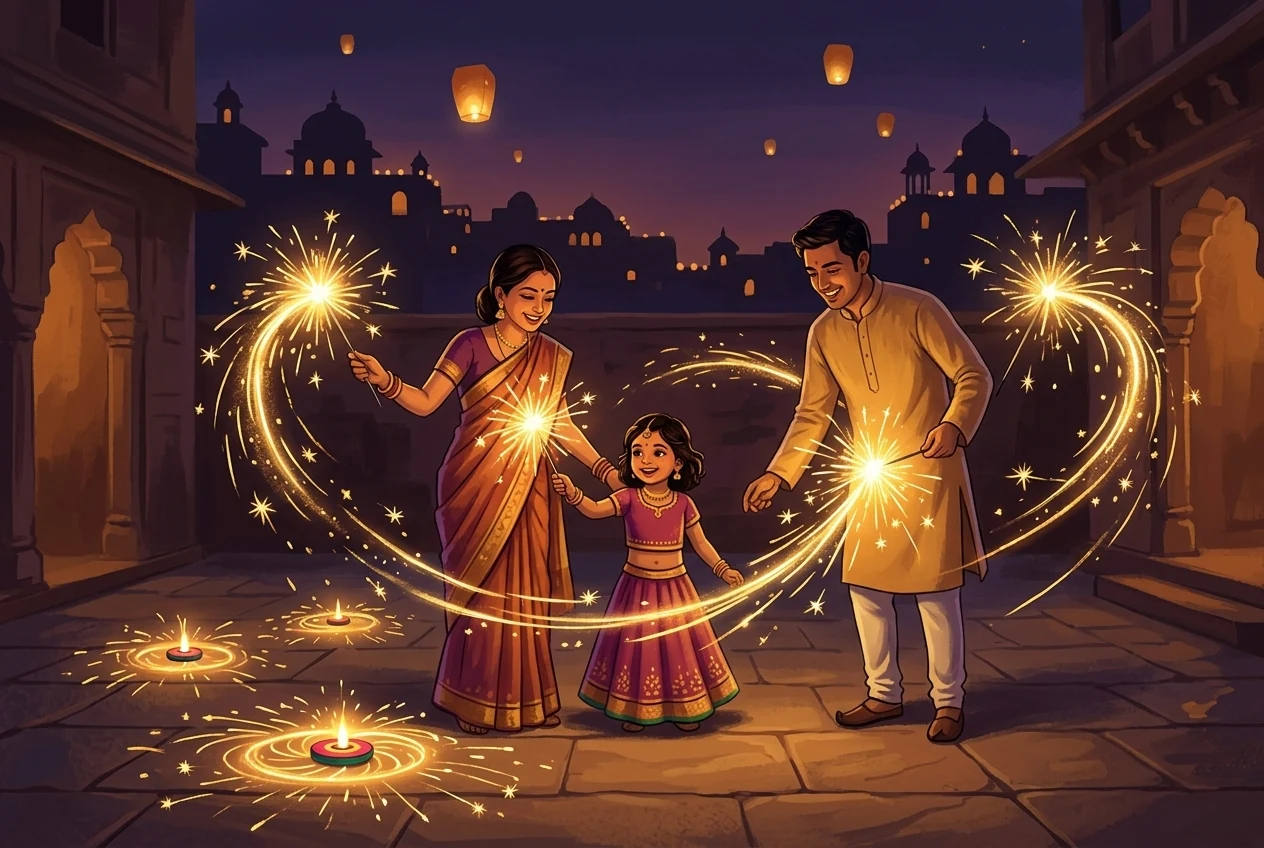
Things to do on Diwali
Make the most of the festival with these time-honored traditions and celebration ideas.
Did you know?
A few fascinating facts about Diwali and its traditions.
A lunisolar calendar date.
Diwali's date is determined by the Hindu lunisolar calendar on Kartik Amavasya (new moon), shifting each year on the solar calendar.
A five-day celebration.
Festivities span five days: Dhanteras, Naraka Chaturdashi, Lakshmi Puja (Diwali), Govardhan Puja, and Bhai Dooj.
Celebrated across multiple faiths.
Diwali is observed by Hindus, Sikhs (Bandi Chhor Divas), Jains (Lord Mahavira's nirvana), and Newar Buddhists.
Auspicious Muhurat trading.
Indian stock exchanges (BSE and NSE) hold a symbolic one-hour evening trading session on Diwali night to welcome financial prosperity.
Frequently asked questions
Clear answers about the dates, history, rituals, and meaning of Diwali in India.
In 2026, the main day of Diwali (Lakshmi Puja on Kartik Amavasya) falls on Sunday, November 8, 2026. Festivities span from Dhanteras on Friday, November 6 to Bhai Dooj on Tuesday, November 10.
Diwali symbolizes the triumph of spiritual light over darkness, good over evil, and knowledge over ignorance. It honors Lord Rama and Sita's return to Ayodhya, and invites Goddess Lakshmi and Lord Ganesha for peace, wisdom, and auspicious beginnings.
Common celebrations include thorough home cleaning, creating colorful threshold rangoli, lighting clay diyas, performing evening prayers, exchanging traditional sweets (mithai) and gifts, and celebrating with family.
Diwali is determined by the Hindu lunisolar calendar, falling on the 15th day (Amavasya / new moon) of the month of Kartik. Because lunar months are approximately 29.5 days, the date shifts between October and November on the Gregorian calendar.
The five festival days are: 1) Dhanteras (auspicious beginnings), 2) Naraka Chaturdashi or Choti Diwali (dispelling negativity), 3) Lakshmi Puja / Diwali (main festival night), 4) Govardhan Puja / Annakut (gratitude), and 5) Bhai Dooj (sibling bonds).
Yes. Diwali (Deepavali) is a nationwide gazetted public holiday in India. Government offices, schools, colleges, banks, and major financial institutions are closed, with special evening Muhurat trading on stock exchanges.
Related holidays in India
Explore other major Indian festivals and national observances.