The Grito de Dolores
In the early hours of September 16, 1810, priest Miguel Hidalgo y Costilla rang the church bell in Dolores and called people to rise against colonial rule. The event began Mexico's independence movement.
Explore the events, people, and milestones that shaped Independence Day in Mexico.
Mexico's Independence Day is observed on September 16 and commemorates the 1810 call to revolt associated with Miguel Hidalgo y Costilla in Dolores, Guanajuato. Public celebrations begin on the evening of September 15 with reenactments of the Grito de Dolores.
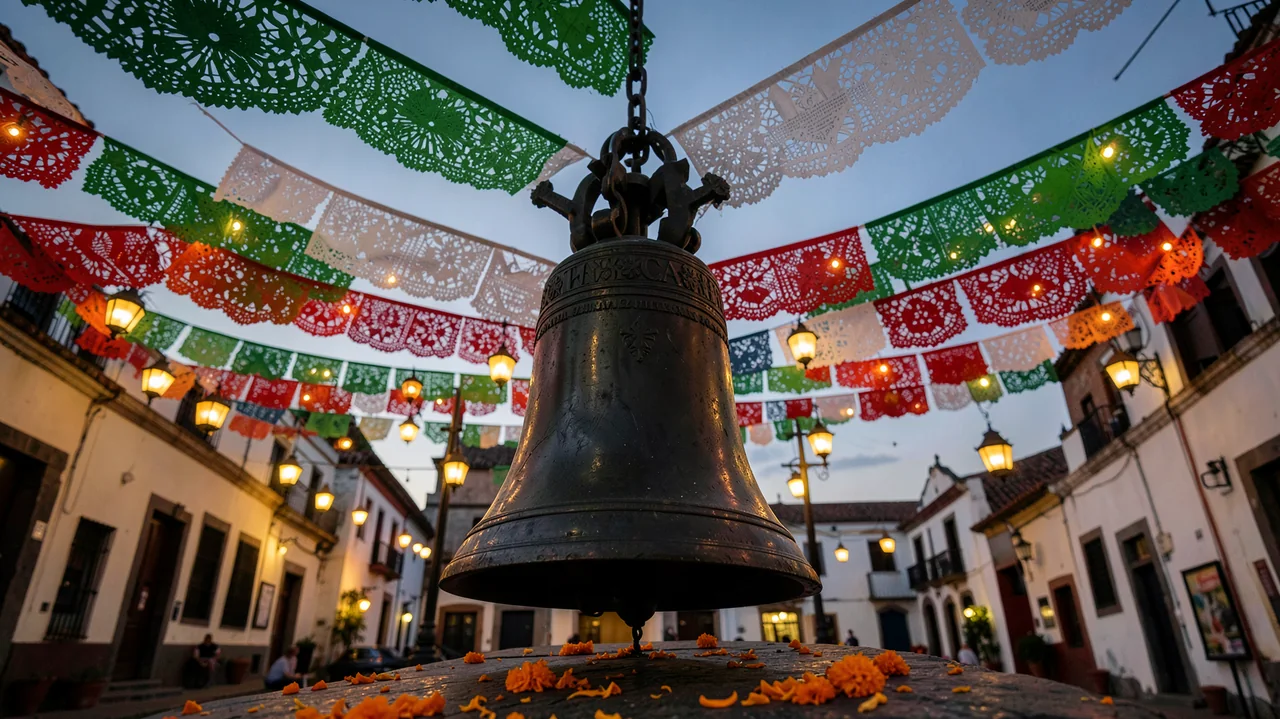
A historic bell and festive colors recall Mexico's independence celebrations.
In the early hours of September 16, 1810, priest Miguel Hidalgo y Costilla rang the church bell in Dolores and called people to rise against colonial rule. The event began Mexico's independence movement.
The struggle continued for more than a decade and involved many leaders and communities. Independence was consummated in 1821 with the entry of the Army of the Three Guarantees into Mexico City.
The modern Grito is delivered on the evening of September 15. The president rings the historic bell at the National Palace, honors independence leaders, and leads cries of national pride.
Miguel Hidalgo's call in Dolores begins the independence movement.
The Army of the Three Guarantees enters Mexico City.
The historic bell from Dolores is installed at the National Palace.
The Grito on September 15 leads into the official September 16 holiday.
Clear answers about the date, meaning, and observance.
Independence Day in 2026 is Wednesday, September 16, 2026.
It marks Miguel Hidalgo's 1810 call to rise against colonial rule in Dolores, Guanajuato.
The civic reenactment takes place on the eve of the official September 16 holiday.
No. Independence Day is September 16; Cinco de Mayo commemorates the 1862 Battle of Puebla.
Common observances include the Grito, bells, flags, public gatherings, music, food, fireworks, and a military parade.