A Lunar New Year Festival
Chinese New Year begins with the first day of the traditional Chinese lunar calendar. Its customs draw on centuries of regional family, religious, and seasonal traditions.
Explore the events, people, and milestones that shaped Chinese New Year in Singapore.
Chinese New Year is one of Singapore's major cultural festivals and a two-day public holiday. Families welcome a new lunar year through reunion meals, visits, red decorations, gifts, temple worship, and public celebrations.
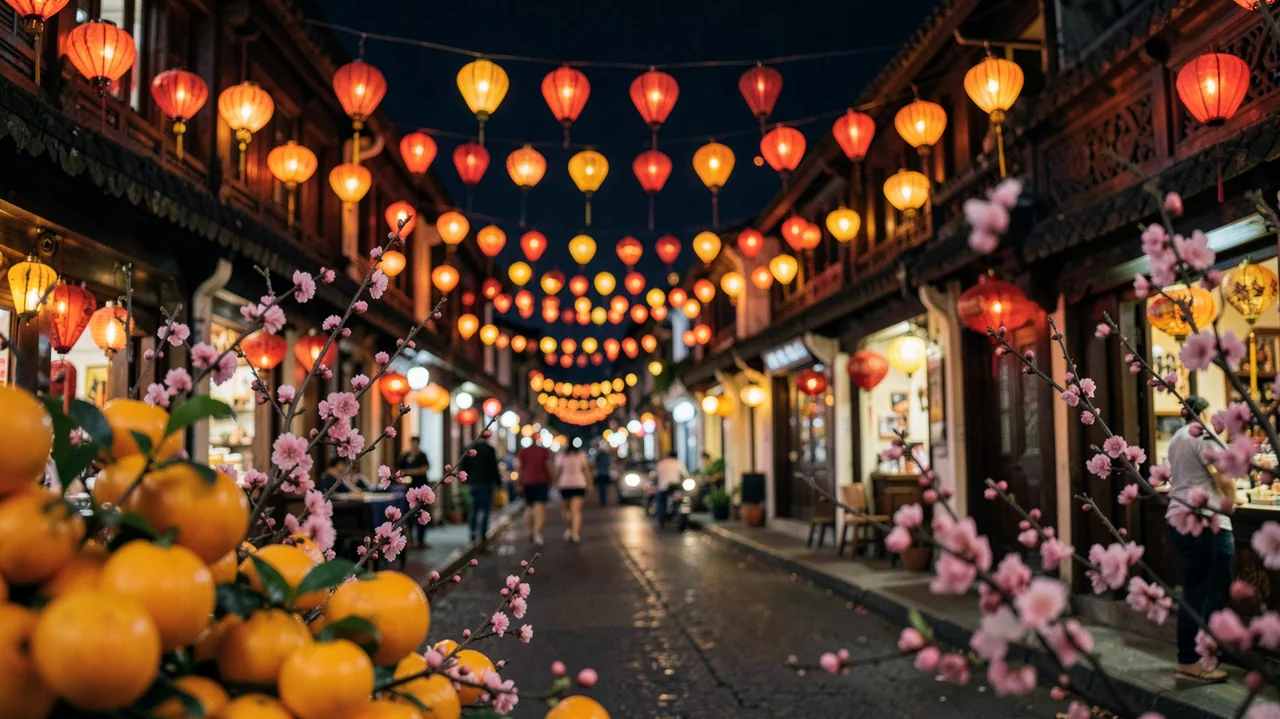
Lanterns, mandarin oranges, and blossoms welcome Chinese New Year in Singapore.
Chinese New Year begins with the first day of the traditional Chinese lunar calendar. Its customs draw on centuries of regional family, religious, and seasonal traditions.
Singapore's Chinese community carried diverse New Year customs from southern China and Southeast Asia. The festival is now a prominent part of the country's multicultural calendar.
The first two days are public holidays. Chinatown light-ups, markets, performances, and community events add a public dimension to family-centered observance.
Families clean homes, shop for food and gifts, and settle preparations before the festival begins.
The reunion dinner brings family members together.
Families visit relatives, exchange greetings and red packets, and attend religious or community events.
The festive period traditionally concludes with the Lantern Festival.
Clear answers about the date, meaning, and observance.
Chinese New Year in 2026 is Tuesday, February 17, 2026.
Chinese New Year is a Lunar New Year tradition; Lunar New Year is a broader term that also includes other cultures' new-year festivals.
The festival follows the traditional Chinese lunisolar calendar rather than a fixed Gregorian date.
Singapore observes the first two days of Chinese New Year as public holidays.
Families hold reunion meals and visits, exchange red packets, pray, enjoy festive foods, and attend public markets and performances.